Part 4 of Everything You Believe About Fundraising is Wrong: 10 Mistakes That Are Killing Your Results
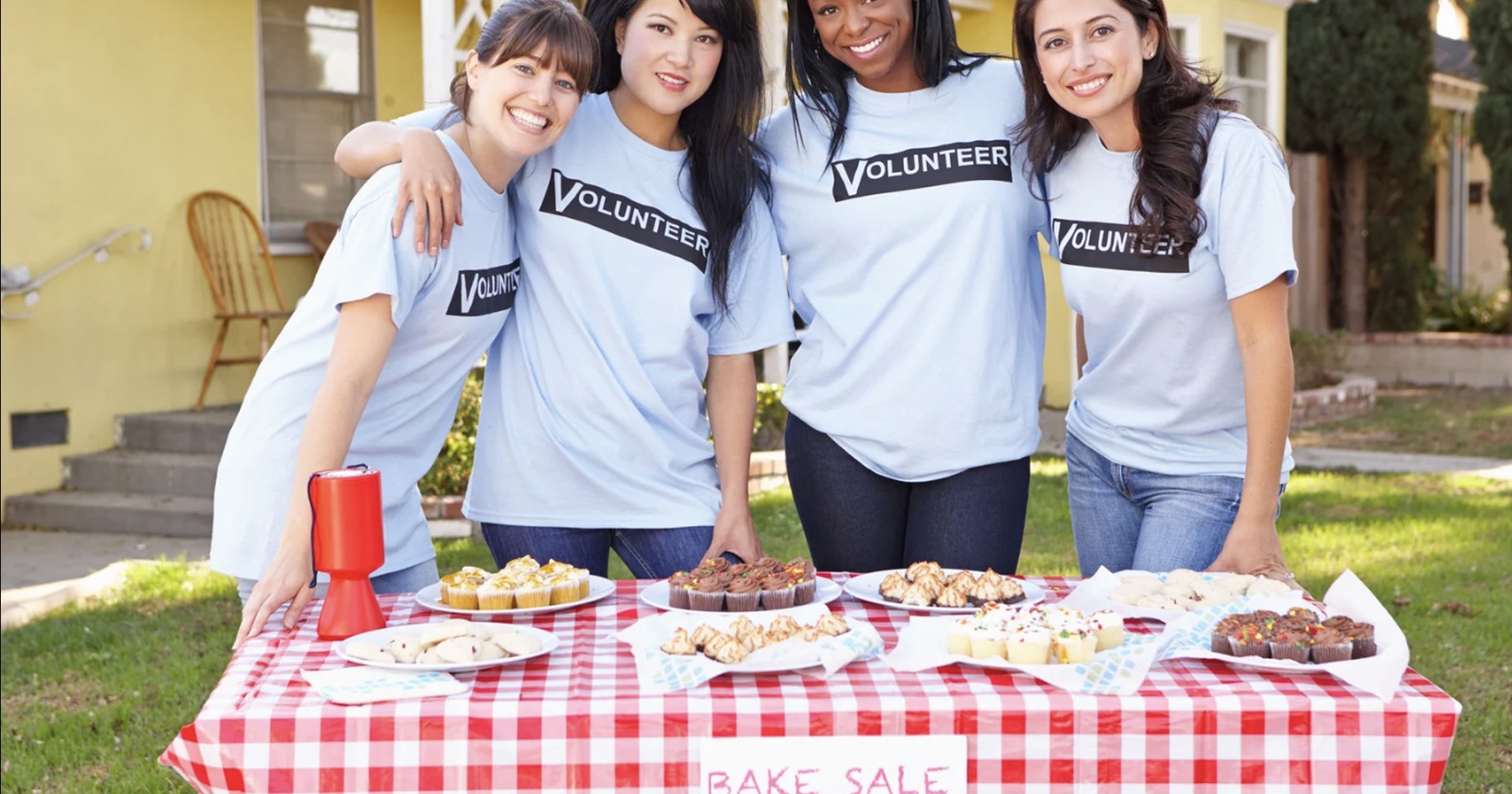
A supporter walks up to your bake sale table. She picks out a small plate of cookies. Five dollars. She hands over a ten-dollar bill and says, “Keep the change.” She walks away feeling warm, feeling generous. She helped!
And you? You deposit five or six dollars in net revenue. Maybe less, once you subtract the cost of the ingredients, the plates, the napkins, and the opportunity cost of the hours your volunteers spent baking and setting up.
A lot of small non-profits survive on events like this. To the extent that such events build community, inform people about your mission, and bring in some money, they can have their place.
However, here’s an important truth:
If someone on your team had simply called the woman who gave you the ten dollars, told her the story of what your organization is doing and why it matters, and asked her for a hundred-dollar donation, there is a very good chance she would have said yes. Happily. Some donors, after a conversation or two, would gladly give a thousand. And they would receive a tax receipt on top of it.
But nobody called your cookie-buyer. Nobody asked. Instead, she got cookies. And your organization got five dollars and a long Saturday.
This is the transactional trap, and it is one of the most stubborn and self-defeating beliefs in the nonprofit world: the idea that you have to give people something in return for their support. A cookie. A car wash. A tote bag. A ticket to a silent auction. Something tangible. Something that justifies the exchange.
It sounds reasonable. It even sounds polite. But it is built on a fundamental misunderstanding of why people give. And the longer an organization operates from this belief, the more it shrinks its own potential.
Why the quid pro quo feels safe
The transactional model persists because it solves an emotional problem for the people running the organization.
If you believe (consciously or not) that fundraising is embarrassing, then giving something in return feels like it balances the equation. You are not asking for a handout. You are offering a product, an experience, an evening out. The exchange feels fair, dignified, like a business deal rather than an act of vulnerability.
This is why so many nonprofit leaders gravitate toward bake sales, garage sales, car washes, charity auctions, and elaborate merchandise. These activities keep the interaction safely on commercial terms. Nobody has to look a potential donor in the eye and say, “The people we are serving need your help. Will you invest in what we’re doing?”
And this is also why organizations pour months of planning into galas and fundraising dinners. The event format keeps everything safely transactional: guests pay for a ticket, enjoy a meal, bid on some auction items, and go home feeling they’ve done their part. The organization nets a fraction of what direct relationship-building would have produced.
But every hour spent organizing a garage sale, every Saturday consumed by a car wash, every evening devoted to selling raffle tickets is time not spent doing the one thing that actually works: building genuine relationships with people who care about your mission, and asking them directly.
The bake sale problem
Dan Pallotta made this same point with devastating clarity in his now-famous TED Talk:
“We’ve all been taught that the bake sale with five percent overhead is morally superior to the professional fundraising enterprise with 40 percent overhead, but we’re missing the most important piece of information, which is: What is the actual size of these pies?”
The logic of the bake sale is the logic of smallness. It celebrates low overhead as a virtue while ignoring the question that actually matters: how much money did you raise, and what did it accomplish? A bake sale that costs almost nothing to run but nets seventy-one dollars is, by this logic, a triumph. A professional fundraising operation that invests real money in donor cultivation but generates hundreds of thousands of dollars is somehow suspect.
Pallotta’s AIDSRides and Breast Cancer 3-Day events raised $236 million and $333 million respectively. They did this by investing in fundraising at scale. The bake sale mentality would never have gotten there. It would have been too busy congratulating itself on keeping costs low.
The same logic applies to the garage sale where volunteers spend a weekend sorting donated junk to clear a few hundred dollars. It applies to the car wash where teenagers stand in the sun for six hours to raise enough for a team trip. It applies to the branded tote bags, water bottles, and T-shirts that eat into already thin margins. Each of these activities shares the same underlying assumption: that people will not simply give you money because what you do matters. That you have to earn it. That you have to trade for it.
You don’t.
In defense of the bake sale
Maybe all of that sounds harsh.
But it’s not meant to be. Before I go on, let me acknowledge that there are valid reasons to hold a bake sale or a car wash.
It’s a very good thing to teach teenagers to give back by sacrificing a Saturday raising money for a good cause by holding a car wash, even if they don’t raise a transformative amount of money. This is how meaningful friendships get forged. This is how communities are built. This is how responsibility is taught.
It’s a wonderful thing to bring together volunteers to bake delicious goods, and then to hold a bake sale that brings supporters to our non-profit’s facilities so they see first-hand where the good work happens, and engage in forthright conversation with our amazing volunteers.
It’s often a savvy idea to create branded merchandise, and to hand it out for free to donors, so our supporters become walking billboards for the wonderful work we do, and begin to identify more deeply with our mission.
But we need to go in to these events and initiatives with eyes wide open about what they can and cannot accomplish, and their hidden costs.
What Donors Really Want
Here’s where the research shatters the hidden assumptions behind the bake sale.
Penelope Burk’s surveys of tens of thousands of donors over more than 20 years represent the most comprehensive body of research on donor behavior. She found something that should stop every bake-sale organizer in their tracks.
What donors want is strikingly simple:
- They want a prompt, personal thank you.
- They want confirmation that their gift was put to work as intended.
- And they want to hear about the results before being asked again.
That’s it. Not a tote bag. Not a brownie. Not a table at a gala. A sincere expression of gratitude, a sense that their gift mattered, and evidence that it made a difference.
In one of Burk’s most cited studies, a single phone call from a board member within 24 to 48 hours of a first-time gift, simply to say thank you (no ask, no pitch, just gratitude), increased subsequent giving by 39% after four months and 42% after fourteen months. The only variable was the call. No trinkets. No swag. Just one human being thanking another.
And yet, Burk’s research also found that only about four in ten donors receive any kind of meaningful thank you at all. Organizations that can’t manage a phone call are organizing entire galas. The priorities are exactly backwards.
The deeper hunger
But there is something even more important at stake here than fundraising efficiency. The transactional model doesn’t just fail to raise money effectively. It fails to give donors the thing they actually need.
Research consistently shows that people who give to charitable causes experience increased well-being, stronger social connections, and a deeper sense of purpose. Neuroscientists have found that acts of generosity activate reward pathways in the brain. Giving is not something people do out of surplus. It is something they do because they need to: the way we need to eat, or breathe, or belong. It is how we find meaning through community.
The most effective fundraising speaks directly to this hunger. The more a nonprofit can help donors see themselves as someone who makes a difference, and the more it can give them a genuine sense of belonging to a community working toward something that matters, the more successful it will be.
When you hand someone a cookie in exchange for three dollars, you are offering them a transaction. When you call them, tell them the story of a life their gift changed, and thank them from the bottom of your heart, you are offering them something far more valuable: the knowledge that they are part of something that matters. You are offering them belonging.
Henri Nouwen, the renowned spiritual writer, put this with characteristic directness in his short book A Spirituality of Fundraising. Fundraising, Nouwen insisted, is the precise opposite of begging. It is an invitation. When you ask someone to give, you are not saying, “Could you help us out, because lately it has been hard.” You are saying, “We have a vision that is amazing and exciting. We are inviting you to invest yourself in this work.”
When you truly understand this, the whole calculus shifts. You are no longer taking from donors. You are giving to them. You are giving them the opportunity to make a difference. And few things speak more deeply to what human beings long for.
What this looks like in practice
Imagine two versions of your organization.
In version one, you spend three weekends running a garage sale. Your volunteers haul boxes, price items, sit behind tables in the heat. At the end, after expenses, you clear maybe $800. Your supporters picked through old kitchenware and secondhand books. Most of them will not think about your organization again until the next sale.
In version two, you take those same three weekends and use them to identify twenty people who care about your mission. You invite each of them for coffee, or a tour of your facility, or a phone conversation. You tell them what you are doing and why it matters. You listen to what they care about. And then you ask: “Would you consider a gift of $500 to make this possible?” Some will say yes. Some will say more. A few will say no, and that’s fine. But the ones who say yes are not buying a product. They are joining a community. They are investing in something they believe in.
Penelope Burk’s research confirms this: the organizations that communicate consistently with impact stories and genuine gratitude don’t just retain donors. They inspire donors to give more generously over time. A beautifully crafted thank-you letter, her surveys show, motivates nearly half of donors to give again. Almost a quarter say they gave more generously because of the quality of the acknowledgment they received.
The garage sale gave your supporters a Saturday of browsing. The relationship gave them a role in your mission.
Letting go of the safety net
The transactional model is a safety harness, and like real-life safety harnesses it often limits how high you can climb. It keeps you small. It keeps you exhausted. And it keeps your donors at arm’s length, where they can never become the true partners your mission needs.
What people want more than a cookie, more than some old kitchenware at a garage sale, more than a clean car, more than a branded water bottle, is a sincere thank-you call from a cheerful volunteer, or, for a larger gift, from the executive director or board chair. They want to hear that their generosity made a real difference. They want to feel that they belong.
Stop trying to sell people things. Start inviting them into something that matters.
Next in the series: “Fundraising is Complicated”: why the belief that you need elaborate systems before you can raise real money is just another way of avoiding the uncomfortable simplicity of asking.